The Great War Bread - (1914-1918)
During the Great War, baking changed significantly. For the first year of the war, when supplies were good and everyone expected the war to be over quickly, bread baking was very much continued as normal. By mid 1915, the mid-Atlantic battle was starting to deplete British flour stocks and bread flour was becoming quite scarce.
The policy adopted by the UK government was to let market forces control the situation. Along with the shortages, a significant price rise was putting pressure on families to afford food items like bread and flour. Official advice by the middle of 1915 was to grow more potatoes and green vegetables in gardens and allotments. Farmers were advised on grow potatoes and cereal crops and they were monitored to ensure that they were making the best use of productive land.
Late in 1915 the German sea blockade was starting to affect food availability and the Board of Agriculture set up the Women's Land Army (WLA) to support farmers and food producers in their work.
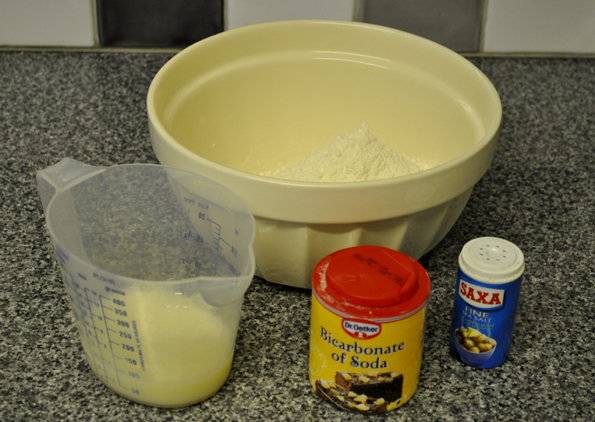 |  |
Bread baking was shifting to households and when strong flour was
unavailable, plain flour would be used to make soda bread. Oats, barley
and rye were also used for bread baking to supplement and extend the
production of bread by bakeries.

The use of bread and butter puddings and bread and jam puddings to utilize stale bread was a common practice in a "Waste not, Want not" society. Many of the good ideas were generated by the Women's Institute in Wales.
New foods were introduced and this period saw the appearance of powdered egg, powdered custard and dry soup mix. Pickled foods were also extensively used to extend the vegetable and fruit use into winter months.
In 1917, adverse weather conditions caused the UK harvest to fail. The effective sea blockade by the German Navy meant that there was a real risk of famine across the UK. It was at this time that the government took control. Rationing was introduced late in 1917 when meat, flour, sugar, butter, margarine and milk were restricted across the whole population. It was also emphasized that the Royal Family were on rations as were all officials and government officers at all levels.
Download the following .pdf recipes
| Barley Bread |
| Economy Bread |
| Family Loaf |
| Mock Crumpet |
| Soda Bread |
| Stale Bread |